 Otomotiv Logo
Quik Support
+90 (542) 556 73 01
Phone
+90 (232) 871 54 88
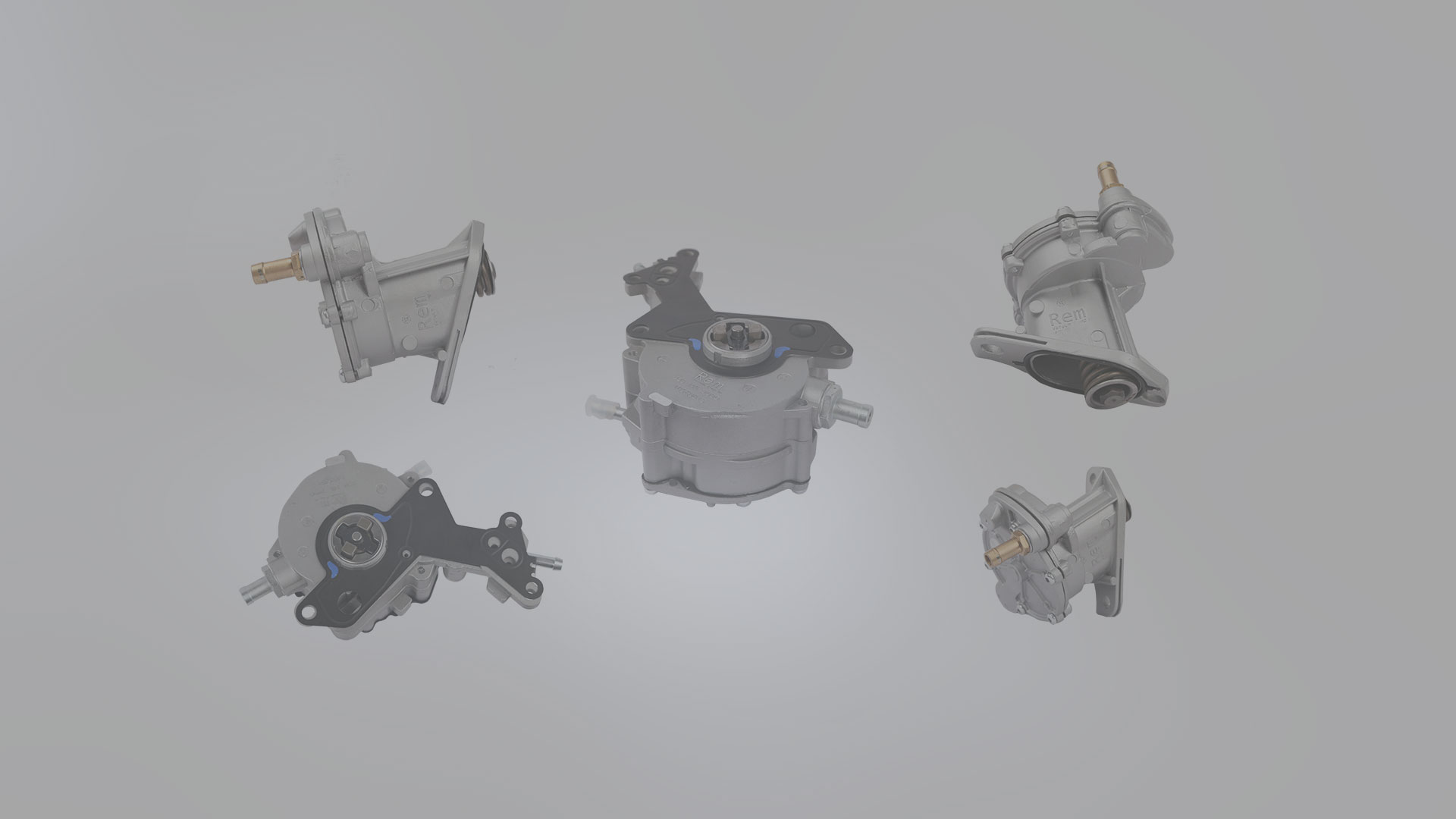
Vakum Pompasi-
Vacuum Pump
The energy required by vehicles is generated by the engine, which is internal combustion and exposed to high temperatures. Heat can damage many components and is an undesirable condition from an engineering standpoint. To reduce heat, a liquid cooling system is used. This system includes many components and elements related to the coolant. Vacuum pumps are used in diesel and light commercial vehicles to create vacuum for the braking system, as well as for other applications like exhaust gas circulation, turbochargers, or central locking systems. They are driven by either the camshaft or crankshaft and are lubricated with engine oil. The vacuum pump transfers the necessary fluid to the desired location.
A vacuum pump is used in motor vehicles to generate vacuum (negative or low pressure). In vehicles, vacuum is utilized to operate various systems. Some engines also include a vacuum accumulator to store vacuum for instant use. Vacuum pumps can be mechanical or electric.
In naturally aspirated gasoline engines, when the gas pedal is not pressed, the throttle valve is almost closed, so the vacuum in the intake manifold is at its maximum. This vacuum is sufficient for the brake booster. As the gas pedal is pressed, the throttle opens, more air enters the manifold, increasing pressure and reducing vacuum. This does not affect normal operation since brakes are not typically used simultaneously with acceleration.
When the brake pedal is pressed, the foot is lifted from the gas pedal, the throttle closes, vacuum reaches its peak, the brake booster is activated, and the brake pedal becomes softer for effective braking.
What is Vacuum?
Vacuum can be defined as air pressure falling below atmospheric pressure. A barometer measures atmospheric pressure (also called barometric pressure), which is 1 bar. When the pressure falls below 1 bar, it is considered a vacuum. For example, a pressure of 0.8 bar means vacuum; pressures like 0.3, 0.4, 0.5, 0.6, 0.7, and 0.8 bar all indicate vacuum. If there’s no air, there’s no pressure — such as in space — which is referred to as "absolute vacuum."
Vacuum means low pressure — any pressure below 1 bar. It is also called negative pressure and refers to the absence or deficiency of air. If a sealed container has less air than the surrounding environment, it will have lower internal pressure, creating vacuum. If the container is flexible, it will collapse inward due to external pressure. For example, a half-empty plastic bottle placed in the fridge will shrink as internal air cools and pressure drops. Or, a juice box collapses if you keep sipping through the straw, as pressure inside falls below atmospheric pressure. Once the straw is removed, air rushes back in, and the box returns to its shape.
Vacuum Pump Basics
Vacuum is used in many vehicles to activate systems, switch between circuits, or provide pneumatic fuel support.
Where does this vacuum come from? What types of vacuum pump designs exist and how do they work? What happens to the vacuum pump when the engine is overhauled?
Vacuum pumps are typically mounted directly on the cylinder head and driven by the camshaft. Because of this "interface," mechanics must have a basic understanding of vacuum pumps.
Vacuum pumps are used in engines where vacuum cannot be generated from the intake manifold. Examples include direct injection engines, turbocharged engines, and engines with variable valve timing.
As the number of pneumatic actuators increases, the need for a vacuum pump also rises. Pneumatic systems can deliver strong pulling forces with compact design.
 Brake boosters, secondary air valves, EGR valves, intake manifold circuits, turbocharger controls, and comfort systems are just a few examples. Since the failure of brake assist can be dangerous, the vacuum pump is considered a safety-critical component.
Vacuum Pumps: Applications (source)
- Vacuum pump
- Vacuum system
- Switching valve
- Pressure converter
- Exhaust gas flap
- Secondary air valve
- VTG turbo
- EGR valve
- Brake force amplifier
Working Principle / Design Types
Vacuum pumps used in vehicles typically generate around 0.7 to 0.9 bar of vacuum. They extract air from the vacuum system and usually transfer it to the cylinder head or crankcase.
They are mostly mounted directly on the cylinder head, lubricated by engine oil, and driven by the camshaft. The working principle depends on the design and is not visible externally.
Earlier types were piston or diaphragm pumps driven by cam, tappet, chain, belt, or cam disk.

Today, vane-type vacuum pumps mounted at the end of the camshaft are mostly used.
Recent developments have enabled the combination of various supply pumps for different substances (tandem pumps):
Oil supply via flange, e.g.,
1.8/1.9-liter diesel engines in Peugeot, Citroën
- Combined fuel/vacuum pumps operate on a common axis with the camshaft.
- Combined vacuum/oil pumps are mounted on the oil pan.
Reusing a vacuum pump in reconditioned engines: Vacuum pumps are connected to the engine and sometimes integrated into the oil circuit. If the engine is damaged, the following issues may arise:
- Metal shavings may enter the vacuum pump via engine oil.
- The vacuum pump may be damaged due to overheating.
- The drive mechanism of the vacuum pump may be damaged.
NOTE:
To avoid further damage after engine repair, we recommend replacing the vacuum pump if the engine has been damaged.
Grup Sitelerimiz 10 Farklı Sektörde bulunuyoruz...
Sac İşleme
Otomotiv
Helikopter Fan
Yapı Elemanları

İnşaat
Demircilik

Tarım Hayvancılık

Hiyenik Havalandırma